 |

 |
|
|
|
||
|
Costa Rica - FAQTell me more about Costa RicaTell me more about the partner organisation? What age do you have to be to volunteer in this program? When will I know specific details on the placement? What language do I need to know to participate in the program? When do I need to arrive in Costa Rica? Tell me more about the Spanish lessons What are the living arrangements when volunteering? Where will I be located? How do I get to the project? How many volunteers are there on the site at the same time? Are we able to do any sightseeing? What hours am I expected to take part in the program? What is the course content of the training/orientation session? How do I pay the program fee? What clothing is appropriate for the program? Are there any more expenses when I arrive? Do I need an entry visa (and how do I obtain this)? Is there any time of year when I can't volunteer? What is the climate like in Costa Rica? What immunizations/vaccines will I need? Can I bring my family/children to this program with me? What is the criterion for volunteers to be accepted into the program? Do I have to be from New Zealand to volunteer through the Global Volunteer Network? Can vegetarians be catered for in this program? Is there an opportunity to take classes such as language or more cultural activities while on the program? Who organizes my visa for my volunteer placement? ------ Tell me more about Costa Rica Costa Rica is known as Central America's jewel. It is a country of four million people, renowned for its diverse natural beauty; rainforests, volcanoes, beaches and lagoons. Amidst the political instability of many nations in Latin America, Costa Rica has a thriving democracy and Costa Ricans promote peace and freedom of speech. Tell me more about the partner organisation? Our partner in Costa Rica is a local organisation with much experience of organizing volunteer programs in Latin America. Their office is in San Jose, the Capital. What age do you have to be to volunteer in this program? To be a volunteer on the Costa Rica program with GVN you need to be 18 years old, unless accompanied by a parent or guardian. When will I know specific details on the placement? After you pay your application fee, you'll be put in touch with our partner and will be sent the infopack with more details about the program. What language do I need to know to participate in the program? Volunteers need to be able to converse in English, and some Spanish would be beneficial. When do I need to arrive in Costa Rica? The first Monday of the month or the middle Monday of the month - the middle Monday is the Monday closest to the 15th - e.g. Monday between the 12th and 18th. Tell me more about the Spanish lessons The Spanish lessons are one on one and mainly conversational. The cost is $300 for 6 nights food/accommodation, 5 four hour days of Spanish lessons, and materials (course book that it was designed for volunteers). The course will help you go through situations like taking buses, buying in the local markets, ordering food in restaurants, and obtaining medicine. If you would like to take Spanish lessons, you should arrive one week before you begin the project. If you are coming from a relatively short flight (such as from the USA) you can arrive on Sunday, ready to start on Monday, but if you are coming from further away you should arrive on Saturday to give yourself time to recover from jet lag. The Spanish School will arrange for an English speaking taxi driver to meet you at the airport and take you to your accommodation. What are the living arrangements when volunteering? Volunteers stay in beautiful beach spots surrounded by forest. Accommodation is very basic but with electrical conveniences like a refrigerator, although placement close to the beach may nto have electricity available. Volunteers will share accommodation with bunk beds and lavatories. Where will I be located? The program is located on Costa Rica's Pacific Coast. The program is based at different conservation beach areas. The projects are located close to conveniences like internet cafes. Volunteers can visit nearby beach towns during their free days. How do I get to the project? You will travel by local bus and a member of the National Park will meet you at the other end. Cost is not included You will be met at Costa Rica's international airport, then transferred to the capital San Jose, about 20 minutes ride. Cost is included. How many volunteers are there on the site at the same time? Currently there are placements for up to 15 volunteers, and you can expect to work in groups of 5-15. Are we able to do any sightseeing? Volunteers will be given an orientation of tourist places when you arrive. You can travel by local buses to most of the tourist attractions. Any sightseeing will be at your own expense and days off for sightseeing can be negotiated with the partner. What hours am I expected to take part in the program? Volunteers will work shifts of 4 hours and then rest, and will work 6 to 8 hours a day in total with one free day per week. Days off are negotiable with the director of the project. What is the course content of the training/orientation session? The welcome pack contains the following information: safety in Costa Rica, traveling around, registration with the Embassy (if required), cultural shock, what it means to volunteer in conservation, rules of the National Park, work involved in turtle conservation, revision of the code of conduct or termination of contract, and what to do in case of a natural disaster. How do I pay the program fee? Your program fee is payable to Global Volunteer Network 8 weeks prior to the 1st of the month you wish to volunteer. Please note that all charges incurred by the payment of the program fee are at the volunteer�s expense, e.g. there is a 5% surcharge on credit card payments. Bank transfers also incur a bank fee at the point of origin that is at the expense of the volunteer. The program fee is non refundable. What clothing is appropriate for the program? Dress needs to be conservative, and light loose clothing is advisable as it is most comfortable in the heat, and it is best to wear clothes that will cover and protect you from the sun and mosquitoes. Bring very light cotton clothes because it could be very wet. Dark clothing is recommended, as you'll often be working at night. Are there any more expenses when I arrive? You need extra money to travel locally if you wish to do it. You will also need to pay for food while you're on your two day orientation session, and for transport to your placement. You may also need to cater for other expenses like bottled water, personal costs, beverages, and entertainment. Do I need an entry visa (and how do I obtain this)? Depending on your nationality and length of stay you may not need a visa to travel to Costa Rica. You will need to contact your nearest Costa Rican Embassy to find out the requirements. Is there any time of year when I can't volunteer? There will be no turtle programs running in March and April; the Baula Turtles program runs from Novemberto February and the Olive Ridley Turtles program runs from May to November. Conservation programs run all year long, and you will be able to help with these in March and April - these are dry months and some of the best times of year to visit the country. What is the climate like in Costa Rica? Costa Rica has a tropical climate, and temperature really depends on the altitude. It has distinctive dry and wet seasons. What immunizations/vaccines will I need? There are no required vaccines for Costa Rica, but we advise volunteers to get immunized against Typhoid, Cholera, Hepatitis A & B, booster doses for tetanus, polio and measles. Volunteers also need to take anti malarials and protect themselves from mosquito bites - as Malaria and Dengue Fever is present. Some of these can be taken in oral form so please do discuss all options with your doctor to see what is best for you. Can I bring my family/children to this program with me? It may be appropriate to bring children with you for this project, and this will be considered on a case by case basis. It is fine to volunteer as a couple, and it can What is the criterion for volunteers to be accepted into the program? Each applicant is considered by the information they provide on the application. If further information is required applicants will be emailed to request this. Please refer to the program requirements listed on the program page which outlines the minimum expectations of what is required for volunteering in this specific program. We also look further at your application as to skills and experience specifically related to the program you have applied to. We look at volunteer experiences, travel experience and also your particular interest in the program to make our decision. Do I have to be from New Zealand to volunteer through the Global Volunteer Network? No, volunteers come from all around the world. Can vegetarians be catered for in this program? We are able to provide vegetarian food - please indicate this on your application form if you would like this. You may need to supplement your diet with some snacks. Is there an opportunity to take classes such as language or more cultural activities while on the program? Yes, we advise volunteers staying for longer than one month to take Spanish language courses. There are two Spanish courses. Both are based on oral communication. Who organizes my visa for my volunteer placement? You do, if you need one. Our program guide has links to Costa Rican Embassies throughout the world. ------ Question not covered here? Please check the generic FAQ, and if still unanswered, please submit your question here. (We aim to answer all email within 48 hours). Click here to apply for the Costa Rica program. |
|
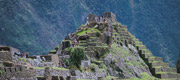
Feature Fundraiser: Machu PicchuIn August 2006 we will be hiking to Machu Picchu in Peru to raise funds for endangered rainforest in Ecuador, among the most threatened pristine forest eco-systems on the planet. Funds raised in the climb will go towards buying and protecting land in two of our Ecuadorian reserves.more >> |
Legal Terms of Service and Privacy Designed by: Creative Conscience Tracked by: Opentracker TEFL | Lives That Matter © 2000-2005 http://www.volunteer.org.nz |