


Greetings,
I am continually amazed at the resilience of Children when faced with what seems like insurmountable odds. I have just returned from visiting children's projects in Kenya and looking at the impact poverty has had on the future leaders of that country. Child Poverty must be addressed and we can all play our part. If you haven't all ready, please join the Stop Child Poverty Campaign: > www.stopchildpoverty.org
Colin Salisbury
Executive Director
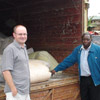
Kenya Food Drop Report
Last month, GVN put out an e-mail appeal for donations for those suffering from the effects of drought in Kenya. The appeal was very successful, and the GVN Foundation was able to buy and distribute one hundred and fifteen 90kg bags of beans and ground corn, totaling about ten tons of food. The food was distributed to a Maasai community situated 2 hours out of Nairobi, and this amount is expected to feed the whole community for a month, which will assist in sustaining these people in an area where it hasn't properly rained for over 3 years. Kenya has been devastated by this drought that has left millions suffering, and the region is in desperate need of humanitarian aid.
This project, organized by Executive Director Colin Salisbury, is a first of its kind at GVN, and as Colin was already heading to Africa for other purposes, he decided to raise some funds for a food drop in Kenya. The food was transported by two hired trucks, and distributed with the assistance of three vanloads of volunteers currently stationed in Kenya. A crowd of about 600 people came to meet the trucks, some waiting for over 8 hours. The aid was first delivered to the two primary schools in the area, with the rest going into the community, with each person receiving two scoops of beans and ground corn. Without this aid, the schools would have been forced to close, as the children rely on the schools to provide a midday meal.
"The ironic thing is that the day we did the drop, it rained!" says Colin, laughing with relief, and it seems that the 3 year drought is finally starting to break. This means that the Maasai people will be able to start planting again, and eventually be able to replace lost cattle, so they can slowly start to re-build their lives.
Another food drop is planned to take place in the same area soon with leftover funds. Anyone who would like to donate to causes such as the Kenya appeal can donate to the GVN Foundation.
> GVN Foundation
> Food Drop Gallery.

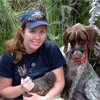
New Zealand Nature Program
It's the motherland of the Kiwi, home to the Kauri tree, 85% of its native flowering plants are endemic, three blockbuster movies decided to film here. It's no surprise New Zealand holds a reputation for being the most unique place in the world. Naturally stunning scenery and a diverse environment are just a few of many factors why people dream of coming here.
Be a part of a dedicated team of volunteers who hold a passion to preserve that beauty. Our New Zealand Nature program has some spaces available for people who want to help save the world they are living in. Volunteers will live together in a large house just outside of Wellington. Your days will be spent doing hands on conservation and environmental restoration work in native forests, wildlife reserves, rugged coastlines, and offshore islands.
The program allows you to be totally immersed in nature, and unites exceptional people together to explore and discover New Zealand's natural environment. One of the highlights of the program is the variety of work which is offered. On Monday you may find yourself planting native forests, the following day you could be sailing or seal monitoring, or you just might find yourself involved in another ecological project.
As our current volunteer would tell you, "The program expands your world and your idea of the world. You will walk away more illuminated; it's certainly exceeded my expectations".
And so while companies plan to clear forests and pollute streams, volunteers nurture our earth. The program has still has spaces available this year, it's your world.
> New Zealand
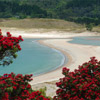
Ten Kiwi Will be Released in Park Thanks to GVN Volunteers
The last time a kiwi pecked the ground in the Rimutaka Forest Park, a protected area 30 minutes from Wellington, it was 100 years ago.
But now, thanks in part to GVN New Zealand Nature Program volunteers, kiwi will once again inhabit the park.
"The kiwi is the national icon for New Zealand," said John Rush, a member of the Rimutaka Forest Park Trust. "It's a rare treasure and it has enormous significance for Maori and Pakeha. The requirements to protect the kiwi are very demanding, so for us to be able to offer 1,000 hectares for the protection of the kiwi gives us a lot of pride."
Throughout New Zealand, kiwi, a nocturnal bird, are at risk of extinction. New Zealand evolved with only two species of land mammal (two species of bats) and kiwis were unprepared to ward off predators. When settlers introduced possums, stoats and other mammals to the country for sport and to create a fur trade, the kiwi population was decimated. The chance of a young kiwi to survive in the wild is only five percent.
In 2000, the Rimutaka Forest Park Trust began a predator control effort to remove introduced species from the area. The project has been so successful that the Department of Conservation (DOC) agreed to release 10 adult kiwis, each with a radio transmitter attached, into the park this May.
GVN volunteers joined the trust in 2003 and have been responsible for maintaining two trap lines aimed at catching kiwi predators. Volunteers have also laid walking tracks, helped with bird monitoring and performed other odd jobs for the trust.
"Volunteers often provide the manpower for jobs that otherwise could not be done due to a lack of resources," said Dan Rollinson, GVN's resident ecologist. "This project shows that with well organised volunteer work and the support of government agencies such as DOC, we can achieve significant gains for conservation."
Rush, who says the trust is grateful to GVN volunteers, said they should be proud of their involvement in the project.
"Volunteers have had an impact on one of the world's most unique places," Rush said. "It's a land that was filled with just birds and lizards. The forest goes back 150 million years. But this land has been ravaged by man's habitation. So volunteers should have pride in seeing the rejuvenation of the forest and the increase in bird life and say, 'Hey, I made a difference.'"
> New Zealand
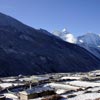
Mount Everest Base Camp
Imagine yourself surrounded by steep snow capped mountains, inhaling frosty fresh air; your feet are planted firmly on one of the world's seven wonders. The Everest Base Camp can not afford to be missed.
It's a trekker's paradise, and the best part of this exciting experience is that all the money raised will help Nepali children who are suffering in poverty.
As a participant of this fundraising trek to The Base Camp of Mount Everest you will have the opportunity to visit ancient temples and palaces in Kathmandu. While on the hike you will visit the highest Buddhist monastery in the world, observing Buddhist prayer rituals as you acclimate to an altitude of 12,687ft/3,867m. You will then hike over glaciers and snow capped rocks as you ascend to the Base Camp of Mount Everest at 17,998ft/5,486m. Upon descending you will visit Sherpa villages, see the famed mountain yaks of the Himalayas and visit the hospital Sir Edmund Hilary created for the people of Nepal. This once in a lifetime experience will not end upon your descent to Kathmandu. Once you have returned to civilization you will then have the opportunity to visit various projects designed to assist Nepali children. You will see the faces of the children your funds will benefit.
Many people dream of doing something great to help, but few have the courage to proceed. As one of the few, you will help and once again give life to the children through the money which is raised. Take that step and rise up to the challenge.
> Everest Base Camp Page
Nepal Update
As we go to print: King Gyanendra announced late last night that he will restore the Nepali parliament and give governing powers back to the House of Representatives and an elected Prime Minister. This news has been welcomed by the political parties of Nepal which has named Girija Prasad Koirala as their candidate for prime minister. The Nepali people have taken to the streets again but this time for victory marches as the announcement is seen as a step in the direction of democracy. Kathmandu City has begun to return to normal after the strike. Public transport is operating once more and shops are open.
Update from the VSN office in Kathmandu: The political situation here in Nepal is somewhat unpredictable. The February elections happened in a state of remarkable calm, although voter turnout was extremely low across the country. The violence that threatened to sweep the country did not materialise and once voting day was over, everyone quickly and quietly went back to living their lives as normally as possible.
April 6th - 24th saw Nepal faced with a general strike, called by the Seven Party Alliance as part of its movement for democracy. There was no road transport around the country and very limited public transport in Kathmandu. Virtually all shops were closed and Kathmandu faced severe shortages of fuel, cooking gas, salt, sugar and rice and prices across the board sky rocketed.
In line with the general strike, daily demonstrations took place throughout the Kingdom of Nepal and the movement for democracy continued growing, with tens of thousands of demonstrators taking to the streets. Some of these demonstrations turned violent with scuffles between the demonstrators and the police. Tear gas was used as a method of dispersal and rubber bullets and live rounds were also been used. Although these demonstrations seemed very dramatic, the areas that they took place were well published, the time of day predictable and it was possible to continue with everyday life without being affected.
As a direct attempt to control the number of people attending the demonstrations, the Government imposed daytime curfews. These curfews were ignored and the protests continued. On the 21st April (day 16 of the General Strike) King Gyanendra made an address, pledging to give up the direct control of the country he took on the 1st February 2005 when he sacked the Government, and asking the Seven Party Alliance (SPA) to nominate a new Prime Minister and revert back to the 1990 constitution.
This offer by the King was initially rejected by the people of Nepal and the SPA as too little too late. They wanted the recall of parliament; the election of constituent assembly to write the constitution, and for the new constitution to decide the monarchy�s role in the country.
VSN continue to run all Kathmandu Valley programmes during this difficult time. We aim to ensure that at least there is a ray of hope for the small group of children that we support as they become more and more dependant on the help we can offer. The needs and safety of our volunteers are of prime concern.
> Nepal
Screen Saver
From all walks of life, different countries, and different backgrounds, People put their life at home on pause to volunteer overseas. Revelations of poverty suddenly feel more authentic. What you here on the news, what you read about, all becomes reality. What they have witnessed, what they have experienced, and how they helped. The memories remain with them.
Place yourself behind the eyes of volunteers, see for yourself images of the forgotten world, and hear what volunteers had to say about their experience.
> Download our free GVN screen saver
UNSUBSCRIBE INFORMATION
This email was sent to (%Email%) by Global Volunteer Network (GVN). We respect your privacy and will respect any decison to receive no further emails from us.
If you wish to opt out of newsletters from GVN simply reply to this message with 'Unsubscribe' in the line.
|
AFRICA
ghana kenya south africa tanzania uganda |
AMERICAS
alaska costa rica ecuador el salvador honduras |
ASIA & OCEANIA
china india nepal new zealand philippines thailand vietnam |
EUROPE
romania russia |
| connecting people with communities in need | unsubscribe |