 |

 |
|
|
|
||
|
GVN Carbon Offset and Reduction Program - FAQTell me more about New ZealandWhat is the climate like in New Zealand? Is there any time of the year when I can't volunteer? What will I be actually doing? Where will I be located? When do I need to arrive in New Zealand? Tell me more about the accommodation? Do you make provision for special diets? Are there holidays or festival I should be aware of when traveling? What age do you have to be to volunteer? What immunizations/vaccinations will I need? What is the criterion for volunteers to be accepted into the program? Do I need to speak English to volunteer? What kind of orientation will I receive when I arrive at GVN headquarters? Can I bring my own family with me to the program? Are there more expenses once I arrive? How much do things in New Zealand typically cost? How many volunteers are there on site at the same time? What hours am I expected to take part in the program? Are we able to do any sightseeing? What clothing is appropriate for the program? Who organizes my visa for my volunteer placement? Do I need travel insurance? How do I pay my program fee? ------ Tell me more about New Zealand? New Zealand is a country of unparalleled beauty: glacial mountains, fast-flowing rivers, deep clear lakes, bubbling mud, and lots of sheep. There are also abundant forest parks, deserted beaches, and a variety of unique fauna some, like the kiwi, vulnerable to extinction. New Zealand society is diverse, sophisticated, and multicultural - the honesty and friendliness of Kiwis will impress you. What is truly unique about New Zealand is that all of its diverse physical, cultural, and artistic landscapes are so close to each other! For more information I suggest you purchase the Lonely Planet's guide to New Zealand. What is the climate like in New Zealand Lying between 34S and 47S, New Zealand sits squarely in the "Roaring Forties" latitude, which means the prevailing wind blows over the country from west to east; this can range from a gentle breeze in summer to a buffeting, roof-stripping gale in winter. The North Island and South Island, because of their different geological features, have two distinct patterns of rainfall: in the South Island, the Southern Alps act as a barrier for the moisture-laden winds from the Tasman Sea, creating a wet climate to the west of the mountains and a dry climate to the east; while the North Island's rainfall is more evenly distributed without a comparable geological feature such as the Alps. Temperatures are a few degrees cooler in the South Island, and both islands receive snow in winter. Winter falls in the months of June through August and summer from December through February. It is important to remember that New Zealand's climate is maritime, rather than continental, which means the weather can change with amazing rapidity and consequence. Is there any time of the year when I can't volunteer? Our website details the current availability for this project. Once you make an application we will let you know if your desired start date is available. What will I be actually doing? As a volunteer, you will move the campaign forward in countless ways, which will include:
Where will I be located? The volunteer team is headquartered in the GVN office near to Wellington (20 min drive from CBD). When do I need to arrive in New Zealand? You can start the program on the 1st or the 15th of each month. Typically, volunteers will be greeted at Wellington airport on their arrival. We are also happy to work with your specific arrival requirements if you plan to travel within New Zealand before your volunteer experience. As you will either start on the 1st or the 15th, you will need to be in Wellington a day ahead in order to actually start on that date. Therefore, your accommodation begins on either the 31st or the 14th of each month, a day before you begin, and it ends either on the 31st or the 14th. Tell me more about the accommodation? You will be staying with other volunteers in our volunteer house. The house is modern and has most amenities people will be used to (TV, internet access, washing facilities etc). The house is run like a cooperative style house where you will share duties such as cooking and cleaning with the other volunteers. Bedding and 3 meals per day will be provided. Do you make provision for special diets? It is possible for special arrangements to be made if you have a vegetarian diet or other special dietary requirements. Are there holidays or festival I should be aware of when traveling? Holidays are a great opportunity for volunteers to go out and see more of New Zealand. The program will not run on the following public holidays (or their days of observance): New Years Day: 1 January Day after New Years Day: 2 January Waitangi Day: 6 February Good Friday (varies): end March/early April Easter Monday (varies): end March/early April ANZAC Day: 25 April Queen's Birthday 1st Monday in June Labour Day: 4th Monday in October Christmas Day: 25 December Boxing Day: 26 December What age do you have to be to volunteer? You must be 18 years or older to volunteer. There is no upper limit for volunteers we only require that volunteers are in good health. What immunizations/vaccines will I need? Although you are travelling in a developed country and there are no legally required vaccinations we do recommend Hepatitis A and B as well as tetanus. What is the criterion for volunteers to be accepted into the program? Each applicant is considered using information they provide within their application. If further information is required applicants will be emailed to request this. Please refer to the program requirements listed on the program page which outlines the minimum expectations of what is required for volunteering in this specific program. We also look further at your application as to skills and experience specifically related to the program you have applied to. We look at volunteer experiences, travel experience and also your particular interest in the program to make our decision. Do I need to speak English to volunteer? Yes, you need to speak English to volunteer. It does not need to be your native language, but you need to be able to write intelligently and be understood in English. What kind of orientation will I receive when I arrive at GVN headquarters? Orientation day- (1st of the month when there are new participants) Morning Tea Meeting with Colin Salisbury, founder of GVN - Greeting, Introduction to GVN Tour of the GVN office Meet staff, introductions and explanation of what everyone does Know exactly what GVN does/how it works - Time to look at website/ binders of Volunteer Coordinator/staff info binder Introduction/explanation of any campaigns/exhibitions GVN is working on currently - e.g. Stop Child Poverty, Breaking Free of Child Poverty photo exhibition tour Brainstorming session/ group and individual goals - Talk about potential ideas about projects/daily work you would like to be involved with, specific interests, etc. *After orientation at the office ends, depending on scheduling, there is a possibility for going into Wellington to see the city Can I bring my own family with me to the program? Because of the nature of the accommodation, and the work that volunteers participate in on this project, it is not appropriate to bring small children with you for this project. However, it is fine for eligible family members to volunteer together. Are there more expenses once I arrive? The program fee covers accommodation, meals, airport pickup, and supervision. If you arrive early or intend to stay beyond your volunteer time in New Zealand then you will need to have additional money for this time. Other expenses not covered by your application and program fees include: your flights, entry visa (if applicable), travel insurance, departure tax, and any personal spending. How much do things in New Zealand typically cost? To give you a idea of the average cost of living in New Zealand, coffee costs US$1.75, fish & chips US$3.50, a restaurant meal out US$15.00, a return bus trip into Wellington US$6.00, a movie ticket US$6.00, a bus ticket US$1.75, a hair cut US$20.00, a visit to the doctor US$30.00, a bungee jump US$50.00. How many participants are there at there onsite at the same time? There is a maximum of 2 climate offset volunteers at any one time, however there are likely to be several other volunteers working on other campaigns and projects during your stay. What hours am I expected to take part in the program? Volunteers will be required to work 8 hours per day. Weekends and evenings are free time. Are we able to do any sightseeing? Yes. Any time that you are not expected to be on your project you are free to do as you please. Weekends are good for visiting local sights, but you may want to spend some time in New Zealand before or after volunteering to see more of the country. New Zealand has breathtaking scenery with a lot to offer and taking a trip to the South Island a must! What clothing is appropriate for the program? Office attire is casual, but you should factor in what the weather will be like during the time you are here. There are likely to be some windy days and rain, particularly if you are here during the southern hemisphere winter. Who organizes my visa for my volunteer placement? You will, if you require one. Most countries have a Visa Waiver Agreement which is valid for 3 months. Do I need travel insurance? As with any overseas traveling, insurance is recommended. The Global Volunteer Network has arranged a comprehensive travel insurance package specially designed for volunteering. It includes excellent medical and accident cover as well as a 'loss of deposits' cover which covers all fees paid to GVN, Airlines etc (up to US$10,000). The cost is US$150.00 for the first month and then US$100.00 per month after that. If you would like to learn more just follow this link: http://www.volunteer.org.nz/insurance/. How do I pay my program fee? Your program fee is payable to Global Volunteer Network 8 weeks prior to the 1st of the month you wish to start the training program. Please note that all charges incurred by the payment of the program fee are at the volunteer's expense, e.g. there is a 5% surcharge on credit card payments. Bank transfers also incur a bank fee at the point of origin that is at the expense of the volunteer. The program fee is non refundable. ------ Question not covered here? Please check the generic FAQ, and if still unanswered, please submit your question here. (We aim to answer all email within 48 hours). Click here to apply for the Carbon Reducation and Offset program. |
|

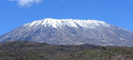 Kilimanjaro