 |

 |
|
|
|
||
|
Uganda - FAQTell me more about UgandaWhat is the climate like in Uganda? What kind of volunteer work is available? Do I need to be from New Zealand? What age do you have to be to volunteer? Do I need to speak English to become a volunteer? When do I need to arrive in Uganda? What immunizations/vaccines will I need? What are the living arrangements when volunteering? Can I bring my family/children to this program with me? Can vegetarians be catered for in this program? Are we able to do any sightseeing while volunteering? Are there more expenses once I arrive? How safe is it to volunteer in Uganda? How many volunteers are there on site at the same time? What resources are available for teaching when I'm volunteering? Do I need to bring my own? Who organizes my visa for my volunteer placement? How do I pay my program fee? ------ Tell me more about Uganda? Uganda is a land locked country in East Africa whose land area of 241,139 sq. km shares borders with Sudan to its north, Kenya to the east, the Democratic Republic of Congo to the west, Tanzania and Rwanda to the south. 40 ethnic groups make up the 21 million people of Uganda, 90% of which live in the rural areas, undertaking subsistence agricultural activities. Lake Victoria the second largest fresh water body in the world provides for the small-scale fish industry in the south and south-eastern region. In the drier northern region of the country, millet and sorghum are the staple foods, whereas the south and the western region feed mainly on plantain (matooke) and cassava. Uganda is one of the poorest countries in the world, with per capita income at US$ 276 and a life expectancy of 47 years for men and 50 years for women which expectancy is expected to worsen as a consequence of the HIV/AIDS epidemic. There are 9.1 million children under 18 years of age of which 1.9 million are orphans. The under five mortality rate is 156 children per 1,000 live births and 38.3% of every new born gets stunted due to malnutrition. For more information I suggest you purchase the Lonely Planet's guide to East Africa. What is the climate like in Uganda? The best times to visit are December-March and June-September. It can be somewhat rainy then, but not as rainy as in the rainy season, March-June. December-February and June-July are the driest times, when things can even be a bit dusty. Although the country lies astride the equator, most of Uganda is on a plateau 3,600-6,000 ft/900-1,830 m above sea level. Temperatures in some parts of the country can be quite cool owing to the country�s high altitude, despite its position on the equator. The mountain areas become much cooler, and the top of Mount Elgon is often covered with snow. Other parts of the country are much warmer. What kind of volunteer work is available? We have a number of projects offered by our partner in the Mukono, Jinja, and Kampala area. The programs are aimed at providing primary and secondary education to needy children, orphan care, and community outreach and counseling, and adult literacy. Many of the projects will involve a flexible schedule of various community-based activities. Volunteers will be contributing to community-based development at the lowest local level. Do I have to be from New Zealand? No, you can volunteer through the Global Volunteer Network from any where in the world. What age do you have to be to volunteer? You must be 18 years old and above. There is no upper limit. You just have to be in good health. A Yellow fever vaccination is legally required to enter Uganda if coming from an at-risk area and you will need to provide a certificate to prove you have had it to obtain a Visa. Do I need to speak English to become a volunteer? Yes it would be helpful if you speak English. You may have English as your second language and that is also fine. While there are many local languages spoken in Uganda, many of the people speak English. In the villages where the programs are located, the commonly spoken languages are Luganda (Mukono District), and Lusoga (Jinja District). It will help you to learn a few phrases in this language while you are there. When do I need to arrive in Uganda? You should arrive on the 1st or 15th of the month as airport pickups are done at this time. You will be met at the airport if you are planning to begin volunteering straight away. If you are planning some tourist time in Uganda before beginning your placement, then arrangements can be made for you to be picked up in Kampala at a later time. What immunizations/vaccines will I need?
What are the living arrangements when volunteering? Typically, after you are met at the airport you will be taken to your accommodation. In some of the village placements you will share a room with one other volunteer and in some you will have a private room (in a house with another volunteer). If in Mukono Town or Kampala, you will live in a house with up to 7 other volunteers and will either share a room with one other volunteer or have a room of your own. Meals and water for bathing will be provided by a hired local person and/or your supervising NGO. You are advised to buy your own bottled water for drinking once you arrive in Uganda. The next day you will be introduced to the NGO staff you will be working with. Can I bring my family/children to this program with me? Due to limited placements in this program, the spaces in the accommodation are reserved for volunteers only. If you are volunteering and would like to bring your family, you will need to arrange separate accommodation for them outside of that which is arranged for you. As the demands of volunteering are quite strenuous, physically, mentally, and most of all, emotionally, we recommend volunteering on your own so that you may focus on the community and your personal health. Can vegetarians be catered for in this program? Vegetarians are fine if they are willing to settle for a limited selection of food. Breakfast is generally tea, coffee, bread, egg (boiled or scrambled). No problem there. Lunch is typically served on site and volunteers eat with other staff and students. The food will probably be posho (cornbread) and beans which does not include meat. For dinner you will end up eating rice and beans predominantly. So you�ll need to supplement if this is not acceptable to you. Are we able to do any sightseeing while volunteering? Yes. Any time that you are not expected to be working you are free to do as you please. Teaching hours vary from 2 - 5 hours per day. Generally, the total hours that you are expected to be �on the job�, in various activities, is 35-40 per week. This is obviously flexible as you will be your own motivator. The locals are very friendly and would be more than happy to entertain you or show you some of the local attractions - particularly animals. You may want to spend some time in Uganda before or after volunteering to see more of the country. You can survive on as little as $20 (U.S) a day, travelling in Uganda. You can also spend much more if you want a bit of luxury. Are there more expenses once I arrive? The program fee covers all meals during your placement. If you arrive early or intend on staying on in Uganda for longer than you are volunteering then you will need to have spare money for this time. Also some money may be required for your days off depending on what you intend doing. Other costs include buying bottled water, departure tax and any shopping you will do personally. How safe is it to volunteer in Uganda? Uganda is one of the safest countries in East Africa. It has a democratic electoral process and a stable economy. We work very hard to ensure you are placed in safe environments while volunteering. The people are very warm and friendly towards foreigners, so you will be well looked after. How many volunteers are there on site at the same time? You should expect between 5 � 15 volunteers each month. There will be some that are long term and have started earlier than yourself and others arriving later. Volunteers in the Mukono Town and Kampala projects have more interaction as a group (in their living situation) whereas those in village placements are typically on their own or with one other volunteer so would need to make an extra effort to meet other volunteers. What resources are available for teaching when I'm volunteering? Do I need to bring my own? Any teaching resources you have that would be of benefit to you in your teaching placement would ideally be taken with you. You can discuss ideas with our partner in Uganda via the email. We will send you an information resource with ideas on teaching to help you in your placement in case you are doing the teaching project. Who organizes my visa for my volunteer placement? You will organize your Visa through your travel agent or independently. For citizens of most countries, you can do this at the airport when you arrive or before you get to Uganda. Also our detailed program guide includes links to Uganda Embassies through out the world. How do I pay my program fee? Your program fee is paid through us. You will be provided with the information to organize payment once your application fee has been received. ------ Question not covered here? Please check the generic FAQ, and if still unanswered, please submit your question here. (We aim to answer all email within 48 hours). Click here to apply for the Mukono program. |
|
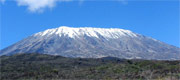
Feature Fundraiser: Mt KilimanjaroIn January 2006 we're climbing Mt. Kilimanjaro as our major fundraiser for the Ugandan Education Fund. Participants will have the opportunity to hike to the top of one of the most beautiful and prestigious mountains in the world, and funds raised will go towards building a school for AIDS orphans in Uganda. more >> |
Legal Terms of Service Designed by: Creative Conscience Tracked by: Opentracker © 2000-2005 http://www.volunteer.org.nz |