 |

 |
|
|
|
||
|
Uganda - FAQTell me more about UgandaWhat is the climate like in Uganda? What kind of volunteer work is available? Do I need to be from New Zealand? What age do you have to be to volunteer? Do I need to speak English to become a volunteer? When do I need to arrive in Uganda? What immunizations/vaccines will I need? What are the living arrangements when volunteering? Can I bring my family/children to this program with me? What is the criterion for volunteers to be accepted into the program? Are we able to do any sightseeing while volunteering? Are there more expenses once I arrive? How safe is it to volunteer in Uganda? How many volunteers are there on site at the same time? What resources are available for teaching when I'm volunteering? Do I need to bring my own? Can you tell me more about your partner in Uganda? Who organizes my visa for my volunteer placement? How do I pay my program fee? ------ Tell me more about Uganda? Uganda is a land locked country in East Africa whose land area of 241,139 sq. km shares borders with Sudan to its north, Kenya to the east, the Democratic Republic of Congo to the west, Tanzania and Rwanda to the south. 40 ethnic groups make up the 21 million people of Uganda, 90% of which live in the rural areas, undertaking subsistence agricultural activities. Lake Victoria the second largest fresh water body in the world provides for the small-scale fish industry in the south and south-eastern region. In the drier northern region of the country, millet and sorghum are the staple foods, whereas the south and the western region feed mainly on plantain (matooke) and cassava. Uganda is one of the poorest countries in the world, with per capita income at US$ 276 and a life expectancy of 47 years for men and 50 years for women which expectancy is expected to worsen as a consequence of the HIV/AIDS epidemic. There are 9.1 million children under 18 years of age of which 1.9 million are orphans. The under five mortality rate is 156 children per 1,000 live births and 38.3% of every new born gets stunted due to malnutrition. For more information I suggest you purchase the Lonely Planet's guide to East Africa. What is the climate like in Uganda? The best times to visit are December-March and June-September. It can be somewhat rainy then, but not as rainy as in the rainy season, March-June. December-February and June-July are the driest times, when things can even be a bit dusty. Although the country lies astride the equator, most of Uganda is on a plateau 3,600-6,000 ft/900-1,830 m above sea level. Temperatures in some parts of the country can be quite cool owing to the country�s high altitude, despite its position on the equator. The mountain areas become much cooler, and the top of Mount Elgon is often covered with snow. Other parts of the country are much warmer. What kind of volunteer work is available? The program aims to reach out to the Orphans and "Street" Children, and families by helping them have a better life now and a constructive future through initiating community sustainable projects and programs. You can participate in: (a) Education & Training for AIDS Orphans: While the extended family has traditionally taken care of orphans in Uganda, the AIDS epidemic has resulted in many children living as beggars on the streets. Volunteers teach in schools, and take part in a children's outreach program on Saturdays. This is a full time program. (b) Mother's & Widows Empowerment Program: The husband is the traditional breadwinner in the Ugandan family, and if something happens to him, his family is left to suffer. The women's empowerment scheme seeks to teach mothers and widows practical skills, so that they can support their family and keep their family in school. The women are taught to raise and sell pigs for profit, and volunteers are expected to have a knowledge of caring for animals and a willingness to build pig pens. This is a supplementary program, and volunteers should participate in other projects in order to fill their schedule. (c) Primary Health Care Project: Our partner's Health Program aims to increase access to basic healthcare for rural people, decrease the prevalence of endemic disease and improve overall village health by providing public health projects and promoting health education in the villages. Our partner also aims to construct health care clinics in rural communities. This program requires a medical background, and is a full time program. (d) Youth Sports Program: This program is run on Saturdays, where volunteers conduct sports workshops with youth who have dropped out of school. This is a supplementary program, and volunteers should participate in other projects in order to fill their schedule. (e) HIV/AIDS Prevention & Counselling Program: This program uses culturally sensitive methods to raise awareness of HIV/AIDS transmission and prevention. There is very little awareness of HIV/AIDS among rural communities, and our program is directed specifically at youth in primary and secondary schools. Trained counsellors have developed educational materials for the local village population, and volunteers use these for the program. Volunteers need to have a strong interest and knowledge in HIV/AIDS, and previous experience in research or counselling is preferred. This is a supplementary program, which runs on Mondays, Wednesdays and Fridays, and volunteers should participate in other projects in order to fill their schedule. (f) Community Development Program: This program teaches villagers a range of skills and knowledge in order to equip them to meet the challenges that rural Ugandan communities face. Villagers learn about sanitation, HIV and health, while they are also taught new skills to help them generate income and promote sustainable development in the region. The local people learn crafts and agricultural skills, rediscovering traditional Ugandan methods or learning new innovations using only local materials. This is a supplementary program, which runs only once a week or once a month, and volunteers should participate in other projects in order to fill their schedule. Your placement will be tailored according to your individual needs and interests. Do I have to be from New Zealand? No, you can volunteer through the Global Volunteer Network from any where in the world. What age do you have to be to volunteer? You must be 18 years old and above. There is no upper limit. You just have to be in good health. A Yellow fever vaccination is legally required to enter Uganda and you will need to provide a certificate to prove you have had it to obtain a Visa. Do I need to speak English to become a volunteer? Yes it would be helpful if you speak English. You may have English as your second language and that is also fine. While there are many local languages spoken in Uganda, many of the people speak English. In the villages where the programs are located, a commonly spoken language is Luganda. It will help you to learn a few phrases in this language while you are there. When do I need to arrive in Uganda? You can arrive at anytime as orientations are done on an individual basis as needed and do not run at set times of the year. You will be met at the airport if you are planning to begin volunteering straight away. If you are planning some tourist time in Uganda before beginning teaching then arrangements can be made for you to be picked up at a required destination. What immunizations/vaccines will I need?
What are the living arrangements when volunteering? When you are met at the airport you will be taken to your host family. The next day you will be shown around the projects. You will share a room with one other volunteer and your family will cook all your meals. You are advised to buy your own bottled water once you arrive in Uganda. Can I bring my family/children to this program with me? You would need to pay additional costs for accommodating your family. You would also need to let us know if this is required so you can be placed in accommodation together. You will need to consider how your children will be supervised while you are working in the program. We would need to look at individual cases and the feasibility would depend largely on the work you were doing and the age of your children. Additional costs will be incurred for expenses of your children. What is the criterion for volunteers to be accepted into the program? Each applicant is considered by the information they provide on the application. If further information is required applicants will be emailed to request this. Please refer to the program requirements listed on the program page which outlines the minimum expectations of what is required for volunteering in this specific program. We also look further at your application as to skills and experience specifically related to the program you have applied to. We look at volunteer experiences, travel experience and also your particular interest in the program to make our decision. Are we able to do any sightseeing while volunteering? Yes. Any time that you are not expected to be at school you are free to do as you please. Teaching hours vary from 2 - 5 hours per day. The locals are very friendly and would be more than happy to entertain you or show you some of the local attractions - particularly animals. You may want to spend some time in Uganda before or after volunteering to see more of the country. You can survive on as little as US $20 a day in Uganda. You can also spend much more if you want a bit of luxury. Are there more expenses once I arrive? The program fee covers all meals during your placement. If you arrive early or intend on staying on in Uganda for longer than you are volunteering then you will need to have spare money for this time. Also some money may be required for your days off depending on what you intend doing. Other costs include buying bottled water, departure tax and any shopping you will do personally. How safe is it to volunteer in Uganda? Uganda is one of the safest countries in East Africa. It has a democratic electoral process and a stable economy. We work very hard to ensure you are placed in safe environments while volunteering. The people are very warm and friendly towards foreigners, so you will be well looked after. How many volunteers are there on site at the same time? This will vary depending on how many volunteers have joined the program however you should expect between 5 � 15 volunteers arriving each month. There will be some that are long term and have started earlier than yourself and others arriving throughout the month. There is a maximum of 15 volunteers per month effective from Sep 1 2004. What resources are available for teaching when I'm volunteering? Do I need to bring my own? Any teaching resources you have that would be of benefit to you in your teaching placement would ideally be taken with you. You can discuss ideas with our partner in Uganda via the email. If you are doing the teaching program we will send you a resource on teaching to help you in your placement. Can you tell me more about your partner in Uganda? Our partner is a non-profit Christian-based NGO founded in 1998, whose primary mission is to reach out to families, orphans and street children of Uganda. They initiate community sustainable projects and programs aimed at uplifting the standard of life in rural communities. They began accepting international volunteers through GVN in 2002. Their main goals are: - To assist the rural families to overcome poverty and the hopelessness by easing the financial burden of many families who are caring for orphans, provide an opportunity for financial self sufficiency from which the whole family unit can benefit and by so doing ensure that some of the root-causes of poverty are redressed. - To avoid cultivating aid dependency. This is done by providing the assistance in the form of either a loan or a once-only gift (seed money) for the specific purpose of achieving the goal of self-sufficiency. - To provide education and an opportunity for orphans to grow up in a caring family environment, other than in institutional care. Who organizes my visa for my volunteer placement? You will organize your Visa through your travel agent before you leave for Uganda. Also our 21 page program guide which includes links to Uganda Embassies through out the world. How do I pay my program fee? Your program fee is paid directly to the program director in Uganda through bank transfer at least one month prior to arrival in country. This should be paid in US dollars. You will be provided with bank details once you have paid the application fee. ------ Question not covered here? Please check the generic FAQ, and if still unanswered, please submit your question here. (We aim to answer all email within 48 hours). Click here to apply for the Ndejje program. |
|
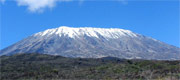
Feature Fundraiser: Mt KilimanjaroIn January 2006 we're climbing Mt. Kilimanjaro as our major fundraiser for the Ugandan Education Fund. Participants will have the opportunity to hike to the top of one of the most beautiful and prestigious mountains in the world, and funds raised will go towards building a school for AIDS orphans in Uganda. more >> |
Legal Terms of Service Designed by: Creative Conscience Tracked by: Opentracker © 2000-2005 http://www.volunteer.org.nz |