|
|
||||||
|
Alaska - FAQTell me more about AlaskaWhat is the climate like in Alaska? What kind of volunteer work is available? What will I be actually doing? Can I select a specific project that I would like to volunteer in? When will I know where my placement will be? Where will I be located? Is there any time of the year when I can't volunteer? Tell me more about flying into Alaska. When do I need to arrive in Alaska? How do I get to the project? What are the living arrangements when volunteering? Can I bring my family/children to this program with me? Can you accommodate specific dietary requirements? Are there holidays or festivals I should be aware of when traveling? What age do you have to be to volunteer? What immunizations/vaccinations will I need? Do I need to speak English to volunteer? What is the criterion for volunteers to be accepted into the program? Are we able to do any sightseeing while volunteering? Are there more expenses once I arrive? How much do things in Alaska typically cost? How safe is it to volunteer in Alaska? How many volunteers are there on site at the same time? What is the course content of the training? What hours am I expected to take part in the program? Is there the opportunity to take classes such as language or more cultural activities while on the program? What clothing is appropriate for the program? Can you tell me more about your partner in Alaska? Who organizes my visa for my volunteer placement? Do I need travel insurance? Can you give me more information on what�s included in the in-country fee? How do I pay my fees? ------ Tell me more about Alaska? There is a reason that Alaska has been deemed "The Last Frontier": it is a place where you can still see wilderness in many forms; many people feel that they are standing on the edge of discovery when they visit Alaska for the first time. Alaska is home to more than half of the world's glaciers, the tallest mountain in North America, Mt. McKinley, is one-third the size of the entire United States of America, is the only state to have borders on three different seas, and so much more. Alaska is rugged and steeped in the history and tradition of more than 10 distinct Native Alaskan Cultures; it is one of the only places left where many individuals still choose a subsistence lifestyle. Visiting Alaska brings one a sense of truly being a part of nature and all of her raw energy and thrills. What is the climate like in Alaska? During the summer Alaska is a far cry from the popular misconception of being one big icebox. While winter temperatures of -40�F are commonplace in Fairbanks, the most frequented areas - the southeast and the Kenai Peninsula - enjoy a maritime climate (45-65�F in summer) similar to that of the Pacific Northwest, meaning much more rain (in some towns 180-plus inches per year) than snow. Remarkably, the summer temperatures in the Interior often reach between 80-90�F. At the peak of summer during June and July Alaska sees almost 20 hours of daylight, while during winter this can be as low as 6 hours per day. What kind of volunteer work is available? Volunteers will have the opportunity to participate in environmental field work of varying degrees, including trail maintenance, research, conservation education, community outreach, park maintenance, plant conservation, and environmental activism. Activities will differ according to the particular project that you are involved in. What will I be actually doing? On each project the volunteer will work closely with the established scientific research projects unique to the region. The archaeological dig project, for example, will involve hard work in the field digging up artifacts and after the dig doing meticulous work in the museum documenting and cataloging the data found. Volunteers have the freedom to develop their own specialised research project as well as taking part in some of our longer-term projects. Can I select a specific project that I would like to volunteer in? You can let us know what your preference would be for the specific projects within the Alaska program, however we cannot guarantee you a placement in one program as it is dependent on availability at the time. Once you have secured your placement in the program by paying the deposit, a specific placement is allocated. When will I know where my placement will be? After you pay the application fee, which secures your spot in the program, we will put you in touch with our partner who will contact you about your placement. Where will I be located? We currently have projects located in Eagle River, Fairbanks, Homer, and the Kenai Peninsula. Is there any time of the year when I can't volunteer? Due to the restrictions of the Alaskan climate, this program only runs in the summer months - approximately April to September each year. Each project has specific start dates; please see the project description pages for specific dates. Tell me more about flying into Alaska. All volunteers need to fly into Anchorage airport, where you will be picked up by our partner. When do I need to arrive in Alaska? Your specific start date will be arranged in coordination with your in-country coordinator. Due to the Alaskan climate this program only runs from approximately April to September each year. How do I get to the project? You will be taken there by our partner, the cost of which is included in the program fee. What are the living arrangements when volunteering? Depending upon the project, the accommodation will vary. This includes homestays, hostels, cabins and tents. Can I bring my family/children to this program with me? Due to limited placements in this program and limited accommodation facilities, the spaces in the program are reserved for volunteers only. We are unable to accept volunteers' family members unless they are volunteering as well. Can you accommodate specific dietary requirements? You should let us know if you have special dietary needs before you arrive. Our partner will provide you with some groceries to get you started and you will be given a portion of your program fee back to buy fresh produce as you go along. Are there holidays or festivals I should be aware of when traveling? Your volunteering will not be significantly interrupted as there are only a few statutory public holidays during the program period, none of which are for extended periods of time. We do encourage getting out to some of the festivals when time permits, though. There are a lot of fun events happening, especially around summer solstice when the days are their longest, including the Kenai River Festival in June (Soldotna) and the Mount Marathon Race in July (Seward). For more information about events in Alaska you can look here: http://travelalaska.com/Events/index.aspx What age do you have to be to volunteer? You must be 18 years or older to volunteer. There is no upper limit for volunteers we only require that volunteers are in good health. What immunizations/vaccinations will I need? Although you are traveling in a developed country and there are no legally required vaccinations we do recommend Hepatitis A and B as well as tetanus. Do I need to speak English to volunteer? Yes, you need to be a native speaker or fluent in English. What is the criterion for volunteers to be accepted into the program? Each applicant is considered by the information they provide on the application. If further information is required applicants will be emailed to request this. Please refer to the program requirements listed on the program page which outlines the minimum expectations of what is required for volunteering in this specific program. We also look further at your application as to skills and experience specifically related to the program you have applied to. We look at volunteer experiences, travel experience and also your particular interest in the program to make our decision. Are we able to do any sightseeing while volunteering? The program will expose you to some of the most dramatic scenery in the world, but for extended self-guided travel, we recommend you allow time at either the beginning or end of your volunteer experience. Are there more expenses once I arrive? The in-country fee covers accommodation and meals. If you arrive early or intend to stay beyond your volunteer time in Alaska then you will need to have additional money for this time. Other expenses not covered by your in-country fees include: your flights, entry visa, travel insurance, departure tax, and any personal spending. How much do things in Alaska typically cost? Alaska, in general, is more expensive than the rest of the U.S. because of the fact that most things are imported. To give you a sense of the average cost of living in Alaska, a premium coffee from a caf� costs US$3.50, a meal out between US$8.00-$20.00, a movie ticket US$10.00. How safe is it to volunteer in Alaska? Some of the projects are located in bear country. Although you may never see one during the entire time you are volunteering, you need to be aware of your surroundings and seek the advice of local staff. In general, Alaska is very safe and if you follow the guidelines of your host, you will be out of harm's way. We work extremely hard to ensure you are placed in safe environments while volunteering and security policies are in place to achieve this. However, as in any situation at home or abroad, there is no way to remove all potential threats. How many volunteers are there on site at the same time? The amount of volunteers at a time is different from project to project, but usually there are 2-4 at a time. What is the course content of the training? Upon arrival our partner will give you an orientation session which includes information about travelling in Alaska, safety issues for working in the outdoors in Alaska, emergency contact details for our partner, and you will have the opportunity to ask any questions you may have. Specific project orientations will take place at the project sites, and will vary between projects. What hours am I expected to take part in the program? Although work hours vary between projects, you should expect to work up to 8 hours a day 5 days a week. In certain projects such as Homer and Fairbanks, there may be some work on weekends for special trips or outings. Is there the opportunity to take classes such as language or more cultural activities while on the program? You will have your weekends free to take part in any extra-curricular activities, and we recommend that you take part in community events and cultural activities to give you a broader experience of Alaska. What clothing is appropriate for the program? It is best to dress in layers as temperatures often vary throughout the day. Summer temperatures can reach up to 80 or 90 degrees Fahrenheit (26-30 degrees Celsius) so short sleeves and flip flops will be most comfortable at times. Warm clothing is also a must as temperatures during May through September can get down to 40 degrees Fahrenheit (4 degrees Celsius), depending on where you are. We suggest bringing thermal underwear, a warm hat, warm gloves, and wool socks. We also suggest waterproof pants and jacket, plus hiking boots. Can you tell me more about your partner in Alaska? Our partner is a non-profit organization founded in 2004. Its mission is to place capable and enthusiastic volunteers from around the world into conservation positions around the state of Alaska. Its goal is to foster community development, environmental awareness, and ultimately to make sure the beautiful land of Alaska is preserved for generations to come. Who organizes my visa for my volunteer placement? You will, if you require one. Most countries have a Visa Waiver Agreement which is valid for 3 months. Do I need travel insurance? As with any overseas travelling, insurance is recommended. The Global Volunteer Network has arranged a comprehensive travel insurance package specially designed for volunteering. It includes excellent medical and accident coverage as well as a 'loss of deposits' cover which covers fees paid to GVN, airlines etc (up to US$8,000). If you would like to learn more just follow this link: http://www.volunteer.org.nz/insurance/. Can you give me more information on what's included in the In-Country Fee? Each volunteer's in-country fee goes directly towards their volunteer experience. Cost of living in Alaska is high compared to most places in the United States. In general, supplies have to be shipped either by boat, air, or overland through Canada, to Alaska which makes for expensive food and other materials. Most people don't realize that Alaska is more than 3,000 miles from the border of the "Lower 48", which makes it a very remote place to be. In addition, finding housing/accommodation in the state of Alaska is like panning for gold in some places! Especially in southeast Alaska, finding somewhere to stay can prove very difficult. Another aspect of your in-country fee is the fact that you will be placed into an already established environmental research project or organization. These projects and organizations are locally run and grass-roots oriented. Therefore, your in-country fee ensures that you are set up with an indigenous organization or project working towards an immediate environmental need in the state of Alaska, while providing you with housing and accommodation for the duration of your stay. How do I pay my fees? Your application fee secures your place on the program (remember this is fully refundable if you decide not to take part in the program). Your program fee is payable to Global Volunteer Network 8 weeks prior to the 1st of the month you wish to volunteer. Please note that all charges incurred by the payment of the program fee are at the volunteer's expense, e.g. if a bank transfer incurs a bank fee at the point of origin, that is at the expense of the volunteer. Eighty percent (80%) of your program fee is refundable until one calendar month before the 1st of the month you are due to begin your program. ------ Question not covered here? Please check the generic FAQ, and if still unanswered, please submit your question here. (We aim to answer all email within 48 hours).
|
|||||
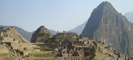
Machu Picchu Trek 2009
Between 16 August and 24 August 2009, GVN is offering a hike to fundraise for the support of 16 girls living in the Hogar de Mercedes de Jesus Molina Orphanage outside of Cuzco, Peru. > Read More
|
|
© 2000-2008 Global Volunteer Network
Tracked by: Opentracker