 |

 |
|
|
|||||||||||
|
Davina Rosen writes......about her experience while volunteering in Ghana.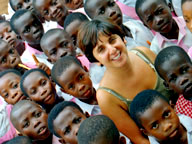 Ghana - Emmanuel International School in Nuaso 2002
All I knew was that I was going to teach schoolchildren English. I'd never taught before or even been to Africa (I didn't count a package holiday in Tunisia as 'real Africa'), and I was feeling petrified when I landed late on a Saturday night in March in Accra, Ghana's capital. But, when I walked into Emmanuel International School in Nuaso (2 hours east of Accra) the reactions of the cute school children in their bright pink uniforms just blew me away, and I'll never forget it! They were staring, but also a lot were shouting, excited and many wanted to touch my skin and hair, though some children as young as three or four backed away in fear! I took the headmaster aside and asked what was going on?! He replied that in a small African village like this many people, particularly children have never seen a white person before! The truth was it was all very scary to start with. All this sudden attention from the kids and the locals although the fascination with my skin colour (fine hair and lack of height) died down, it never really went away for the whole 2 months I was there - neither did the cries of "blau fauno" (white person in their local language). Teaching took a lot more preparation than I'd anticipated and I only had the curriculum guide, an old grammar text book and my imagination as resources. (Oh dear!) Originally I was teaching three stage groups - ages and abilities are mixed, they just move up a stage each year providing they have enough money to continue paying for schooling. I taught Stages 2,3 and 5. (Approximately aged 8 to 12). Stage 2 were quite lively and receptive, 3 like banging my head against a brick wall to get responses and 5 quiet and studious. Realising I wasn't going to cane them if they got the wrong answer, which is usual from the other teachers, they all became a bit livelier, especially once I started to inject a bit of fun into the lessons. However, as soon as the other stage groups realised, they wanted me to teach them too! Delayed exams provided me with an opportunity to introduce activities. I got everyone to paint and draw, which isn't normally on their timetable. They loved it, although at the beginning they weren't used to being given free rein to draw what they wanted and lacked a little imagination in this area! I also organised a football tournament for the boys and girls and held a sports afternoon for them too, including the sack and running races, as well as egg/round fruit from the nearest tree race! I rewarded them with confectionary that they rarely get the chance to sample. Unfortunately because of the exams and holidays too, plus the fact that I was only teaching in the mornings due to the intense heat, I didn't get into a proper teaching routine and was trying to teach all 6 stages and the two Junior Secondary groups in a very short time, running myself ragged towards end. I vowed that I will return to teach them a full term, instead of just a few months, next time. Because their culture is very music orientated, it wasn't long before I was dancing along to the neighbouring children's singing and makeshift drumming after school. I always seemed to acquire quite an audience too, but to me playing and dancing with the children are some of my best memories. In Nuaso itself it was difficult to buy much fresh food or other essentials. There was a market in the neighbouring town of Agormanya on a Wednesday and Saturday which was where I bought my supply of fruit and veg. The family lived on a diet of rice, yam and a tomato or fish based spicey stew. They also prepared traditional ground up cassava and corn to create a dough-like substance called fufu, banku and kenkey (I forget which is which!) They tore it with their hands and dipped it in the stew - most people used their right hands to eat everything rather than cutlery. They couldn't understand my fascination with wanting light lunches and salads. Their normal routine was a drink in the morning, a main meal around 10.30 and another one later on after school. I couldn't quite grasp this eating pattern! Anyone considering teaching in Ghana should bring an open mind, good mozzie protection, cool clothes and lots of ideas! Also be prepared for lots of constant attention. In small villages too there will be limited communication, no money facilities and very basic bathrooms. All this aside, everything in Ghana seemed like a different world, but this was definitely real Africa. So many cultural differences made it very challenging, but their enthusiasm also made it the most rewarding experience of my life! Davina Rosen |
||||||||||