|
|
||
|
Itinerary for the Machu Picchu Climb16 August 2009 (Sunday)
Located in the heart of Cuzco's archaeological centre and just a few minutes away from the Main Square, this is a modern 4 star hotel with a fine colonial touch. Each of the 124 rooms is comfortably furnished with noise reducing windows, central air conditioning/ heating, in-room safe, bathroom, hair dryer, telephone (international direct dialing), television, radio, minibar, laundry, fax, internet, and modem connections. Within the hotel are found a good restaurant & bar, 24 hour concierge service & medical assistance, hairdresser, sauna, shops, and solarium. You have the rest of the day to relax at the hotel and slowly acclimatise to the altitude (3400 metres), or you can head out on a walk to see the famous San Blas artisans' quarter, where you can see wood workers, painters, potters and a variety of other skilled artists plying their trade. Jose Antonio Hotel, Cusco (B&B) 17 August (Monday)This morning you enjoy a guided half day's sightseeing excursion in and around Cuzco. Contrary to ancient legend, the grand city of Cuzco was founded in 1100 AD and went on to become a religious and military stronghold when the Incas ruled here from 1438. The Spaniards arrived and built many buildings in the Baroque and Renaissance styles and it is this extraordinary mixture of pre-Columbian ruins, elaborate Incan stonework and colonial architecture that makes Cuzco such a beautiful city today. A few ornate ecclesiastical gems include La Compania, which was built in 1576 and is considered to be one of the finest examples of Baroque architecture in the whole of the Americas. In addition to a city tour you visit the archaeological sites of Qenqo with its lovely temple and amphitheatre, the water shrine of Tambomachay, the old fort and lodgings of Puca Pucar, as well as the extremely impressive Inca ceremonial centre of Sacsayhuaman close to Cuzco. At Sacsayhuaman the sheer size of the blocks of rock that were carved and used in the construction of the temple is remarkable, with some blocks weighing almost 130 tons, and yet they were fitted together with absolute precision. There are three great walls running parallel for over 360 metres with 21 bastions along the way, so it was originally thought to be a huge fortress, but modern thinking suggests that in fact this is a temple to the Sun, where an altar of solid rock is approached by broad steps and the zigzags appear to be chicha (maize beer) grooves along which the liquid flowed down during festivals. Priests' graves have also been discovered here, which is another clue to its original purpose. Later today you return to your hotel in Cuzco where you can prepare for the following day's Inca Trail trek. Jose Antonio Hotel, Cusco (B&B) 18 August (Tuesday)
Here you will meet your porters & gather the equipment you'll need to start the Incan Trail trek. You start the trek by going through semi-arid terrain along the Urubamba River with magnificent views of the snow-capped mountains. You cross the bridge and walk along the left bank of the Urubamba River as it flows north-west along the Sacred Valley. Following a flat path you arrive in Miskay (2800 m) where you start ascending to a point overlooking the Inca city of Patallacta (2750 m). The Patallacta ruins are the remnants of a large settlement with many farming terraces, which were thought to have been used to keep other settlements in the area supplied with food. You then continue trekking along the valley created by the Kusichaca River, gradually climbing for about 5 hours until you reach your first campsite in Wayllabamba village (3000 m). Along the way you enjoy spectacular views of the Vilcanota ridge on the opposite side of the Urubamba River, where the impressive Veronica peak reigns at 5832m. Camping - Wayllabamba (FB) 19 August (Wednesday)After breakfast this morning you leave Wayllabamba behind to begin the most difficult part of the trek, which consists of an abrupt and steep ascent that stretches for 9 km. Along this climb, the landscape changes from sierra to puna (a dry and high area with little vegetation). On the way to the first mountain pass, the Abra Warmihua�usca (Dead Woman's Pass), you will see domesticated llamas and alpacas grazing on ichu, one of the few plants that grow at that altitude. You also cross an area of cloud forest, which is the habitat for many different kinds of birds like hummingbirds and sparrows, as well as the Andean or Spectacled bear. It is advisable that on this day especially, your daypack is well stocked with candies, chocolates and coca leaves that will keep your sugar level high, and help with altitude sickness. Immediately after the pass, you descend into the Pacaymayo valley (3600 m), where you camp after approximately 6 hours of hiking. Camping - Pacaymayo (FB) 20 August (Thursday)This day is the longest but also the most impressive and interesting, owing to the number of archaeological sites that you visit. From Pacaymayo you climb to the second mountain pass of Abra de Runkurakay (3970 m). Halfway up you visit the archaeological complex of the same name. This site consists of a small oval structure that is believed to have served the purpose of a watchtower. After crossing the pass you descend towards Yanacocha (Black Lagoon) and enter the cloud forest before arriving at Sayacmarca (3624 m). This is a beautiful complex made up of a semi-circular construction, enclosures at different levels, narrow streets, liturgical fountains, patios and irrigation canals. Continuing up on an easy climb you arrive at the third mountain pass, the Abra de Phuyupatamarca (3700 m). The complex of the same name is one of the most complete and best-preserved archaeological complexes along the Inca Trail to Machu Picchu, and is located on the highest point of the mountain. Phuyupatamarca means "town over the clouds". From above you can observe a sophisticated sacred complex made up of water fountains with solid foundations, and also gain impressive views of the Urubamba River valley and the long descending stone steps along which you continue on to Wi�aywayna (2700 m). Wi�aywayna is an impressive site made up of an agricultural centre with numerous terraces, a religious sector and an urban sector. Camping - Winaywayna (FB) 21 August (Friday)
From Intipunku you descend into Machu Picchu itself and after 40 minutes you enter the citadel from the highest point through the "House of the Guardians". You then descend to the control point for registration and here you leave your backpacks, before starting a 2 hour guided tour of the Inca citadel. High above the gorge in a remarkably inaccessible location lie the ruins of one of the most stunning and important archaeological discoveries of modern times. For centuries Machu Picchu had lain hidden, buried beneath the undergrowth, thus escaping the looting and pillage that all other major Inca sites suffered. It was in July 1911 that Hiram Bingham stumbled across this ancient citadel straddling a mountain pass and with steep terraced slopes falling away to the Urubamba River far below. With the help of a Yale University archaeological team, Bingham thought he had discovered the lost city of Vilcabamba, but this has since been disproved. Built by Inca Pachacuti, the founding father of the Inca empire, the real purpose for its existence is still not totally clear�a fortress, a place of worship? A further mystery is why it was deliberately abandoned and when�possibly as a result of the Spanish invasions, the Inca Civil wars, drought or disease? What is clear is that this was an important discovery as many of the buildings were in good condition and today you can still see the ceremonial baths, Temple of the Sun, fountains, Royal palace, funerary rock, Temple of the Windows and a wide variety of other impressive structures and buildings. The torreon was an observatory for the solstice sunrise and the Intihuatana is the centre point between cardinal alignments of nearby sacred peaks. The Incas worshipped anything to do with nature and its spiritual power and this high altitude location allowed them to indulge these beliefs. Overlooking Machu Picchu is the tall, craggy mountain of Huayna Picchu, which also has terraces carved into its vertical slopes, which is a truly remarkable achievement and it is possible to climb to the top of this and enjoy some stunning views over the whole site. In the late morning you are at leisure to explore Macchu Picchu under your own steam. This afternoon you regroup in the town of Aguas Calientes where you can relax in the thermal baths. In the late afternoon you travel by train to the city of Cuzco, arriving after nightfall. On arrival at the railway station you will be met and transferred to the Jose Antonio Hotel where you stay for the night. Jose Antonio Hotel, Cusco (B&B) 22 August (Saturday)This morning you will be transferred to Anta in the outskirts of Cuzco where you will be engaged with the GVN project. This morning you will be driven to Anta Cuzco to visit the girls orphanage. You will stay with a local family in a middle class hostel. Please note that the accommodation and food for this portion of the trip will not be luxurious like the hotel. Also, the team might need to sleep in two separate accommodations. In the hostels individuals will be sleeping dormitory style (multiple bunk beds are in each room). There is a toilet in the hall and running water/electricity are available most of the time. If you would prefer to stay in a hotel, your hike coordinator can arrange that for an extra cost. Please contact your hike coordinator for more information. After you have settled into your rooms we will have lunch and then pile into buses to visit the children of the orphanage. After we have met the kids and toured the orphanage we will return to the hostel for a simple Peruvian meal. GVN Project, Anta (FB) 23 August (Sunday)This morning we will return to the orphanage to visit with the children. There is a chance that we will be able to build a playground for the children on this day. After a day of playing with the children and working on the orphanage we will return to our accommodations. This will be our last night together. After a simple celebration dinner we will tell each other goodbye. GVN Project, Anta (FB) 24 August (Monday)This morning you will be met at our accommodations and transferred back to Cuzco. We will make arrangements for you to either return to the hotel (if you are staying on in Peru) or we will take you directly to the Airport. GVN Project, Anta (B)
The meal plans on each day are represented by the following symbols: |
|

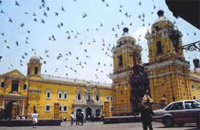 On arrival at Cuzco Airport/Railway Station you will be met and transferred to the Jose Antonio Hotel where you stay for the next two nights.
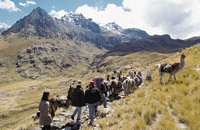 Before dawn this morning you will be met at your hotel and transferred by private bus to Piskacuchu (2700 m), a village located on the 82nd kilometre of the Cuzco -Machu Picchu railroad.
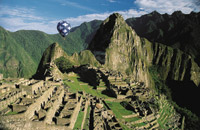 After an early pre-dawn start you leave Wi�aywayna in order to climb to Intipunku or The Sun Gate. This hour's hike leads along a trail of flat stones on the edge of cliffs in highland jungle. From this fabulous vantage point you watch the sunrise over the sacred citadel of Machu Picchu.
Honduras
Living with a Honduran family, and volunteering at projects in rural locations, volunteers will assist a community in need. > Read More
|
|
© 2000-2008 Global Volunteer Network
Tracked by: Opentracker